Tear-off and deck prep when needed
If the deck is uneven or damaged, panels will telegraph flaws and fasteners will not hold properly. We check the sheathing and address problem areas before metal goes on.
Serving Akron, Ohio & surrounding areas
Mon–Sat · 7am–7pm
Upgrade to a roof built for Northeast Ohio weather. We install and replace metal roofing with clean lines, tight flashing, and details that prevent leaks for the long haul.
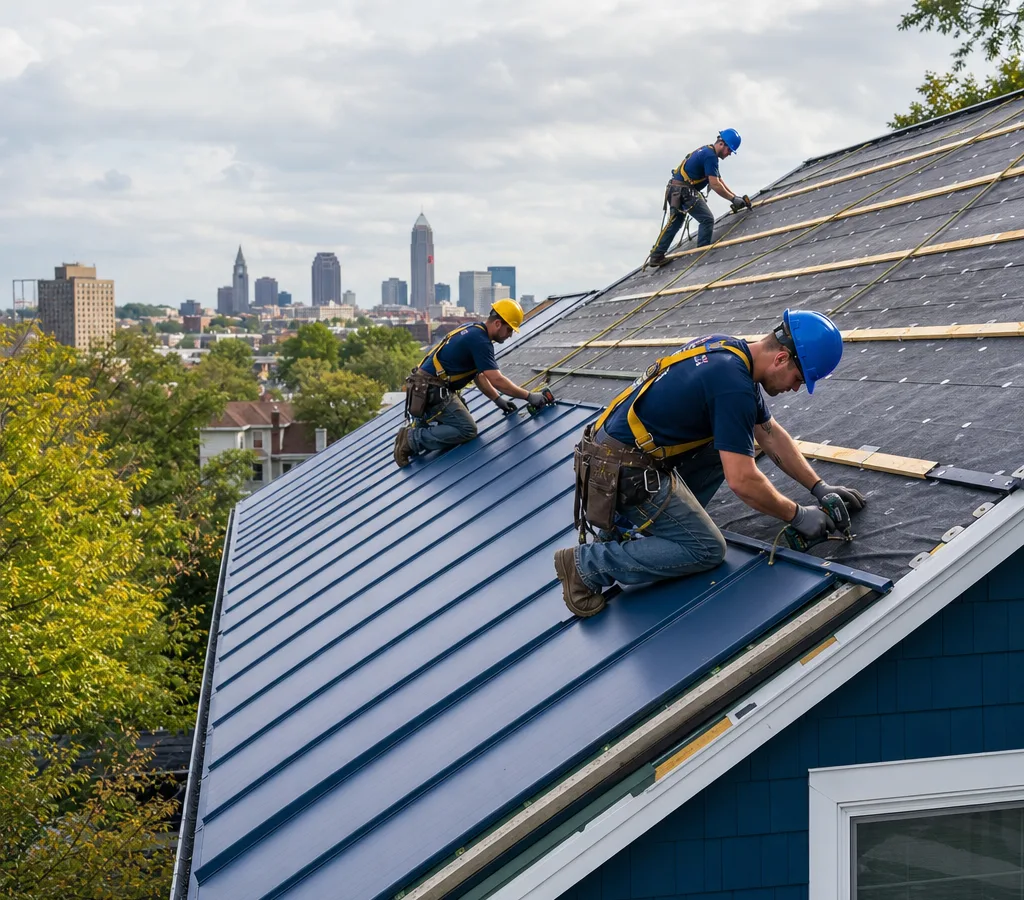
Built as a complete system
If you are searching for metal roofing Akron Ohio, you are probably weighing durability, curb appeal, and whether a metal system makes sense on your specific roof. A good metal roof is a system, not just panels. Performance depends on underlayment, ventilation, flashing at chimneys and walls, pipe boots, ridge and hip caps, and how everything is fastened so it can handle wind, temperature swings, and water.
Akron gets the kind of weather that exposes weak roof details: heavy rain, snow and ice, freeze-thaw cycles, and windy storms. Metal roofing can be a strong fit in this climate when it is installed with the right assembly and the right details at edges and penetrations. Our team at Roofing Contractors Akron focuses on doing the fundamentals well: correct tear-off and deck prep when needed, proper underlayment choices, clean metal transitions at valleys and sidewalls, and a final walkthrough so you know what was done and why.
Many Akron neighborhoods have older rooflines and additions that create extra valleys, dormers, and wall intersections. Those are exactly the spots where installation quality matters most. If you want a roof that looks sharp on day one and stays tight for years, the plan starts with an inspection and a written scope that spells out materials, flashing locations, and how we will protect your property during the work.
Match the system to the house
Metal roofing comes in different profiles and fastening approaches, and the best choice depends on your roof geometry, attic conditions, and how you want the roof to look.
During an inspection, we focus on the areas that typically decide whether a metal roof performs as intended: decking condition (soft spots, rot, uneven sections), ventilation balance (intake and exhaust), chimney and wall flashing, valley layout, and the roof-to-gutter edge detail. We also confirm how water moves off the roof so we can plan the right drip edge, gutters alignment, and snow/ice considerations.
If you are also comparing providers, start with a team that does metal every week and can clearly explain why each detail is being specified. A general overview of how we approach roof projects is available through our Akron roofing contractors team.
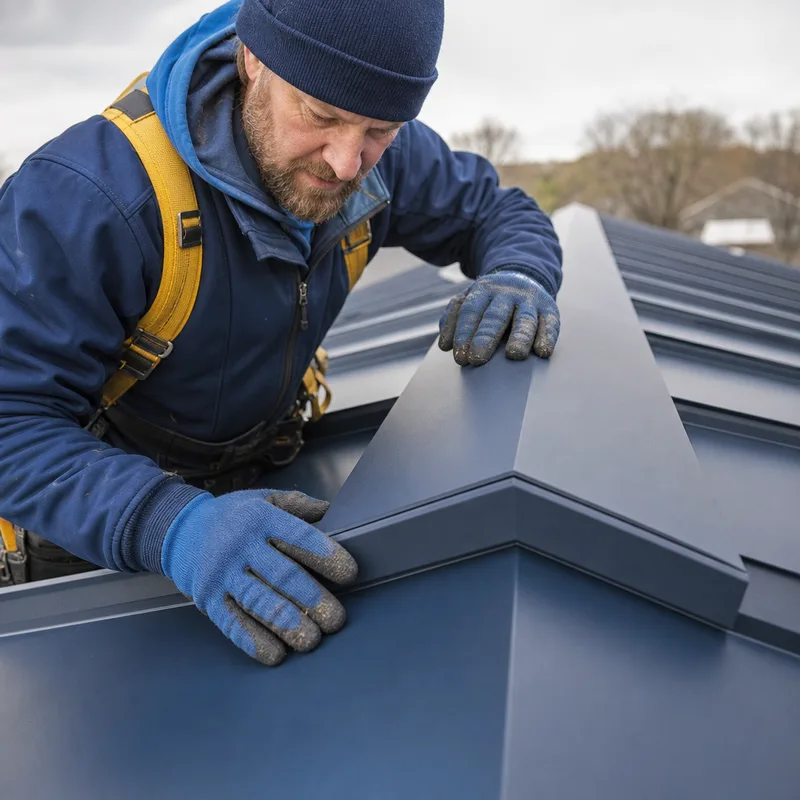
Complete installation details
If the deck is uneven or damaged, panels will telegraph flaws and fasteners will not hold properly. We check the sheathing and address problem areas before metal goes on.
Underlayment is part of the water-control system. The right choice depends on slope, roof complexity, and how the roof is ventilated.
Chimneys, sidewalls, step flashing, valleys, and pipe penetrations are where leaks usually start. We build those details first and tie the metal system into them.
Metal expands and contracts with temperature changes. Correct fastening patterns and accessory details help the roof move without loosening or oil-canning.
Eaves, rakes, and drip edges are not cosmetic extras. They guide water into the gutter line and protect the deck edge from repeated wetting.
You get a clear summary of the work completed, what to keep an eye on, and how to maintain the roof around vents, valleys, and gutter areas.
Inspection through closeout
A clear sequence keeps roof preparation, critical flashing, panel installation, and final details aligned with the written scope.
We review slopes, penetrations, valleys, attic ventilation, and any areas that show water staining or soft decking. This is where we decide what prep is required and which metal profile fits your roof.
You receive a scope that spells out the metal type, underlayment approach, flashing locations, and the plan for edges, ridges, and penetrations so there is no ambiguity about what is included.
We protect landscaping and access areas, then remove existing roofing as specified. We inspect the deck and replace damaged sections when needed so the metal roof starts on a solid base.
We install underlayment, then build out valleys, sidewalls, chimney flashing transitions, and pipe boots so the metal panels tie into a watertight system.
Panels (or metal shingles) are installed to manufacturer requirements, followed by ridge/hip caps and final trims. We check seam alignment and fastening consistency as we go.
We handle debris removal and a full site cleanup. Then we walk the completed roof with you and answer practical questions about care, drainage, and what to expect season to season in Northeast Ohio.
On-site pricing
Metal roofing in Akron typically ranges from about $10,000 to $30,000+ for a standard residential replacement, depending on roof size, complexity, and the metal system selected. Exposed-fastener projects often land toward the lower end, while standing seam and metal shingle systems trend higher.
Your final price changes with tear-off needs, deck repairs, chimney and wall flashing complexity, number of penetrations, steepness, and how many hips/valleys the roof has. The exact cost is confirmed after an on-site roof inspection and a written scope of work.
Installation quality up close
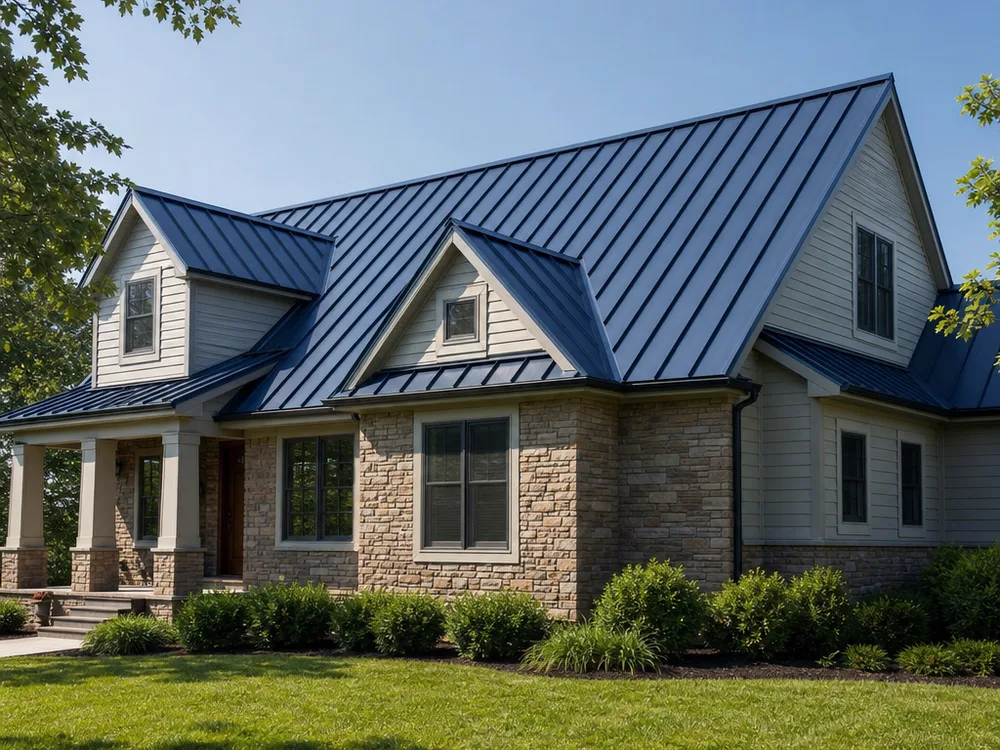
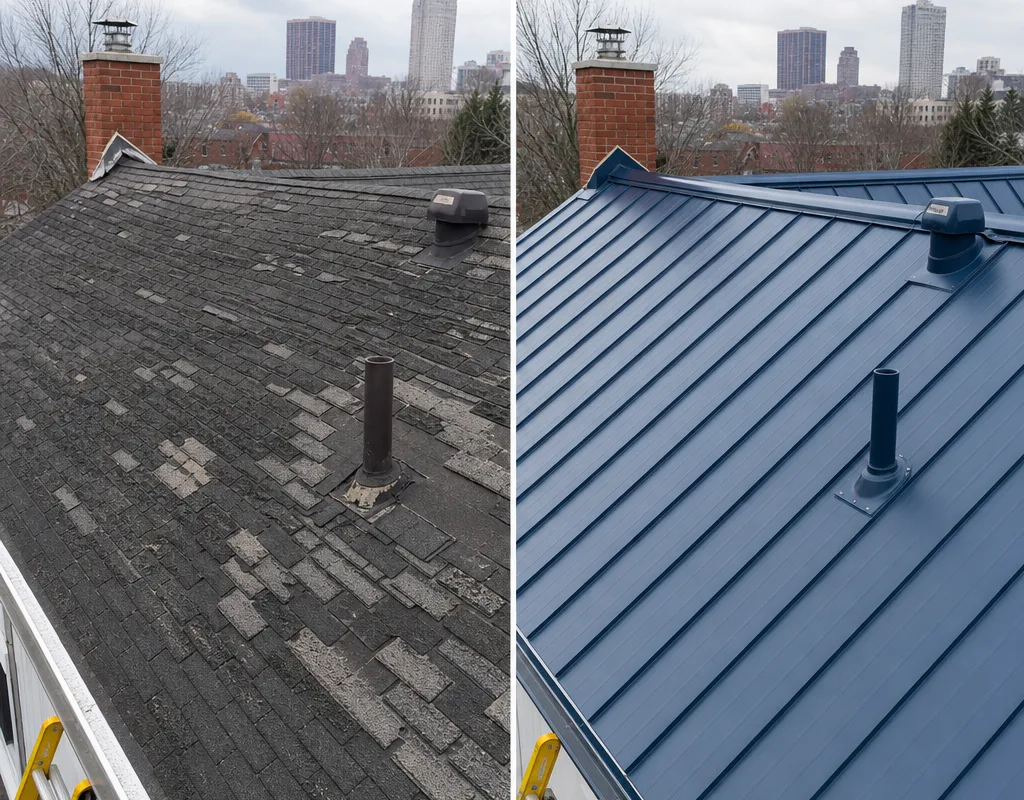
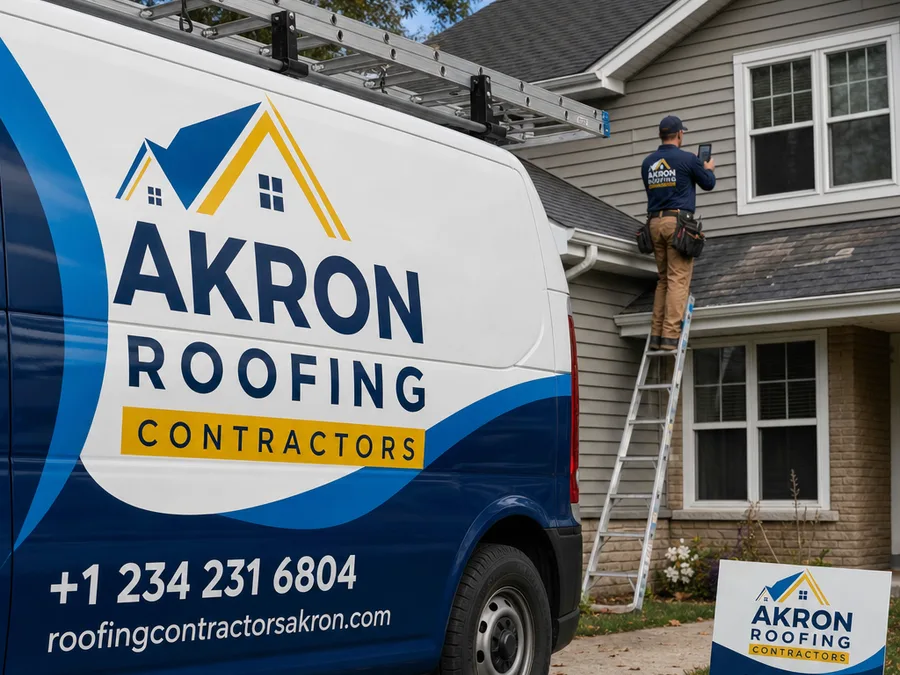
What homeowners notice
We wanted metal but were worried about leaks around our chimney and the small rear addition. The scope was clear about the flashing work, and the finished roof looks sharp. After a few heavy rains, everything stayed dry.
They explained the difference between exposed fasteners and standing seam without pushing us. The install was organized, and the cleanup was better than we expected.
The biggest plus was the attention to detail at the edges and vents. It feels like the roof was built as a system, not just panels screwed down.
Plan with confidence
Yes, metal roofing can perform very well through Akron winters when the roof is detailed correctly at eaves, valleys, and penetrations. The key is water control: proper underlayment, correct flashing, and edge detailing so meltwater routes into the gutter line instead of backing up at the deck edge.
Sometimes metal can be installed over an existing roof, but a tear-off is often the better choice when the deck needs inspection or the roof has uneven areas. In Akron, many homes have older decking or multiple roof planes, and seeing the wood lets us correct soft spots and build reliable flashing transitions.
Standing seam uses concealed fasteners and raised seams, while exposed-fastener panels use visible screws with sealing washers. Standing seam is often chosen for cleaner appearance and long-term fastening integrity, and exposed-fastener systems can be a cost-effective option when installed with the right fasteners, spacing, and closure details.
Most residential metal roofing projects take a few days, but the timeline depends on roof size, complexity, weather, and whether deck repairs are needed. Roofs with multiple valleys, dormers, and chimneys usually take longer because the flashing work is more detailed.
A properly installed metal roof over solid decking with underlayment typically does not create a dramatic increase in indoor noise. The assembly under the metal, including deck condition and insulation/ventilation in the attic, plays a bigger role than the metal itself.
Look for a written scope that spells out the metal system, underlayment, and specific flashing work at chimneys, sidewalls, valleys, and penetrations. For metal roofing Akron Ohio projects, the details at transitions are usually what determine whether the roof stays watertight over time.
Tell us what you have now and what you want to change. We will inspect the roof, walk you through metal options that fit your home, and provide a written scope you can compare with confidence.